


Environmental Responsibility underlines the organization’s responsibility for the direct and indirect environmental impacts caused by the company’s operations. Its objective is to operate responsibly, considering the carrying capacity of the environment and the sustainable use of natural resources.
Energy use
A lot of electrical energy is required to build, produce and maintain the services and infrastructure of a ski resort. Sappee uses 100% carbon-free electricity with a certificate of origin.
The resort uses combustion engine machines and devices (snow groomers, snowmobiles, ATVs and other machines). All the resort’s two-stroke snowmobiles have been replaced by four-stroke snowmobiles that produce lower emissions. Equipment is renewed regularly. The resort has also investigated the suitability of electric powered snowmobiles and considers making the switch to electric as soon as the machines are suitable for the needs of the resort.
Regarding fuel use, the resort is looking into switching over to bio fuels. In case it is not possible to get all the needed fuel as bio fuel Sappee has the possibility to compensate those.
In terms of lighting, the resort has changed the area’s general lighting to more energy-efficient LED lights and is in the process of doing the same for slope lights, according to their renewal schedule.
All the slopes in the resort have artificial snow. The resort monitors, tests and invests continuously to improve the energy efficiency of the producing snow. In the past 10 years, the resort has invested around one million Euros in snowmaking systems. Along with these investments, the resort’s need for electrical energy has decreased in comparison to the amount of snow made in cubic metres.
The resort encourages its guests to pay attention to energy consumption when staying in resort accommodations. The resort has encouraged cottage owners to improve the energy efficiency of their heating solutions, and for example, the new Sappee holiday accommodations completed in 2025 use geothermal heating, while air‑source heat pumps have been installed in several previously built cottages. The resort has begun replacing temperature controllers in its facilities, enabling automatic temperature reductions when the spaces are not in active use. This is estimated to reduce heating energy consumption by approximately 6–10% per facility annually. During 2026–2027, the resort plans to upgrade its trace heating systems to be remotely controlled based on temperature. This improvement is expected to reduce annual energy consumption by 4–10%, depending on weather conditions.”
The Environment
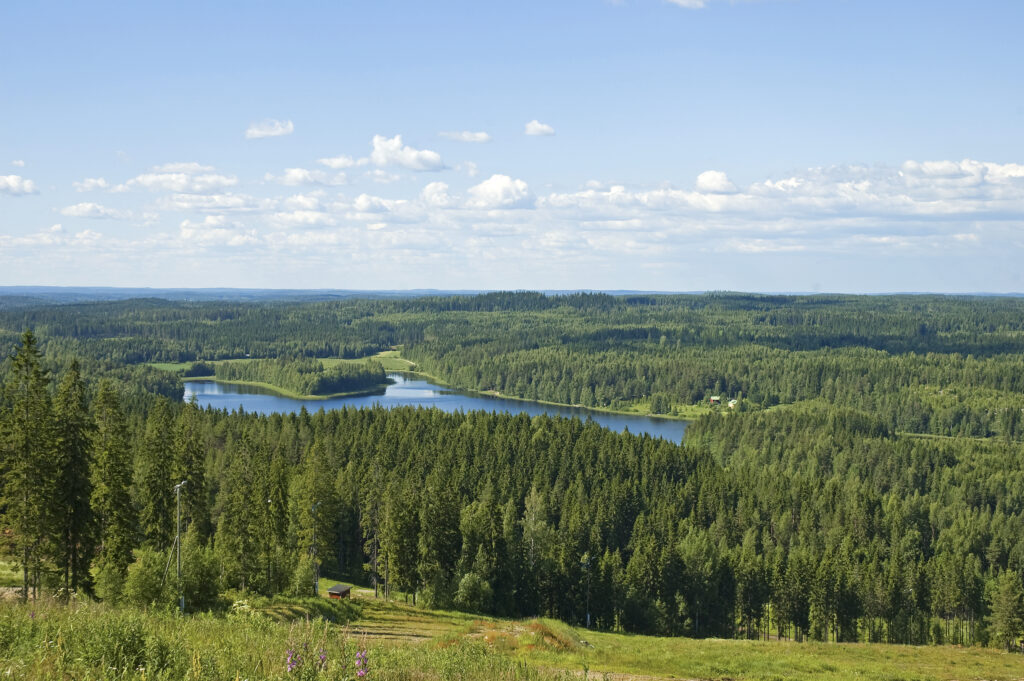
The resort is located on the outskirts of the Laipanmaa wilderness area. The surrounding nature and the environment play important roles in the services the resort provides, and the resort emphasizes the diversity of nature and the condition of the environment in all their operations.
The resort’s ski slopes have been built on land owned by the company. As customer numbers have increased, the need for building more slopes has become a reality. New slope areas have been planned. Landowners, the environment and minimizing the impact on nature have all been considered in the planning process.
If new slopes were to be built, they would be built in wooded areas. The trees in these areas would be cut down and compensated through ecological compensation.
All the slopes in the resort have snowmaking systems. These systems require water, energy, manpower and machinery. The water required for making snow is pumped from Iso Arajärvi lake located at the northern end of the slopes. The surface area of the lake is 44 hectares; the lake is 1,6 kilometres long and 700 metres wide. The lake has four bays protruding in different directions: Soukonlahti to the northwest, Hyyrätinlahti to the east, Pitkälahti to the southeast and the fourth bay bends to the southwest. The lake drains into Sappeenjärvi, which then drains into Pälkänevesi. The lake is part of the Kokemäenjoki waters.
Pumping water from Iso Arajärvi is subject to permission. The resort keeps track of the amount of water pumped as well as the water surface elevation of the lake regularly. The resort works in close cooperation with Kvvy Ry, the Water Protection Association of the River Kokemäenjoki. In accordance with the program agreed in the permit regulations, Kvvy Ry monitors the effects on the waters in Iso Arajärvi and Sappeenjärvi and produces an annual fishery monitoring report. These reports are then submitted to the authorities at ELY Centre, the environmental protection authority of Pälkäne municipality, the Sappee cooperative society, and to the representative of the Roine-Mallasvesi-Pälkänevesi fishing area. The current water abstraction permit is sufficient for the current slope area. The resort supports the operations of the Sappee cooperative society (635-432-876-1) and with the resort’s help, the society plants fish in Iso Arajärvi and Sappeenjärvi.
Landowners, the environment and minimizing the impact on nature have all been considered in the planning process and building of Bike Park routes. The soil materials used are environmentally suitable.
Sappee stopped using fireworks in the year 2000. Fireworks do not belong in the environment Sappee is in and they disturb the animals in the area. Sappee does not recommend using fireworks in the area.
Recycling
The resort strives to use all materials as long as their life cycles allow. In 2005, the resort dismantled the Urjanlinna log building that served as the main restaurant. The logs from the dismantled building were reused and made into two different buildings (the caravan service building and Vohvelikahvila restaurant). Out of the nine lifts in the resort, three have been given a complete overhaul and put into use again after being decommissioned by another ski resort. By doing so, the resort continues the life spans of previously owned machines.
Pirkanmaan Jätehuolto Oy is responsible for the resort’s waste management. Since 2022, the resort has been recycling household waste in the accommodation units it manages as well as in its own facilities. The resort provides the possibility to recycle biowaste, paper, metal, and glass that are generated as part of household waste. Along with it, the resort has started advising the customers on the importance of recycling and how they can spend their time at Sappee leaving as little a carbon footprint as possible.
The resort recycles all scrap metal resulting from its operations. The scrap is collected by a third party regularly. Waste oil is collected into tanks and taken to be recycled by a licenced waste oil contractor. Electrical equipment is taken to a dedicated recycling point.
Pirkanmaan Jätehuolto Oy is responsible for the resort’s household waste management. They transport waste to the Tammervoima Waste-to-Energy Plant where mixed waste is turned into thermal and electrical energy. Pirkanmaan Jätehuolto Oy processes biowaste at the Biomylly biogas facility in Nokia, where the biowaste is converted into products such as biogas, fertilizer, and soil improvers.